
How to Find Consistent Boutique Sizing
Table of Contents
- Why Boutique Sizing Varies So Much
- How to Measure Yourself for Clothing Accurately
- How to Read a Clothing Size Chart Like a Pro
- How to Spot Misleading Size Charts
- Using Boutique Clothing Fit Reviews to Verify Sizing
- Testing a Boutique's Sizing Consistency Across Products
- How to Choose the Right Size When You're Between Sizes
- Reducing Fit Risk: Returns, Exchanges, and Personalized Help
- Frequently Asked Questions
Last Updated: October 17, 2026
Why Boutique Sizing Varies So Much
Boutique sizing inconsistency is one of the biggest frustrations when shopping online. You order a small from one brand and it's tight. You try a medium from another and it swims on you.
When you shop at a large retailer, sizing is standardized across the entire inventory. A boutique, by contrast, hand-picks pieces from multiple vendors. One brand cuts generously. Another runs small.
The good news? You can learn to identify which boutiques maintain reliable sizing across their collections. This guide walks you through a method to evaluate fit consistency before you add pieces to your curated selection.
How to Measure Yourself for Clothing Accurately
Your body measurements are the foundation for everything that follows. Without accurate measurements, you can't compare yourself to a size chart or evaluate how a garment will actually fit.
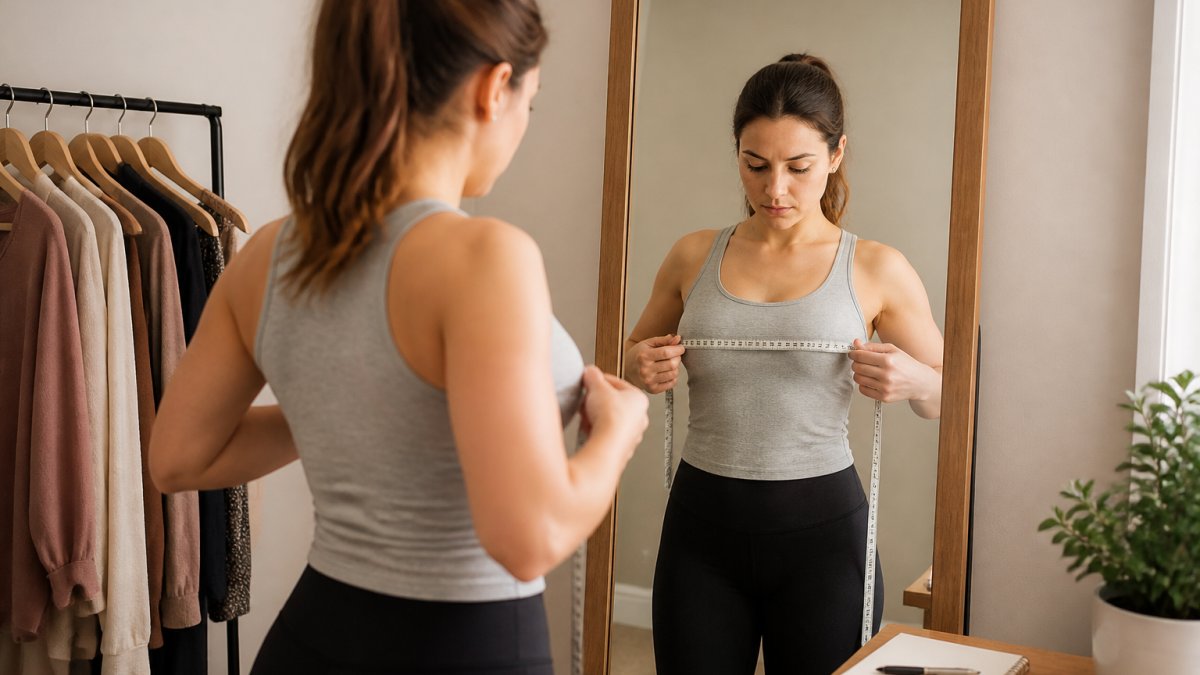
Taking Your Bust, Waist, and Hip Measurements
Start with a soft measuring tape. Fabric tapes stretch less than plastic ones and give more reliable readings.
For your bust: Measure straight across your chest at the fullest point, keeping the tape snug but not tight.
For your waist: Find the narrowest point between your ribs and hips. This is usually a few inches above your belly button.
For your hips: Measure at the fullest part of your hip and glute area, usually about 8 inches below your waist.
Write down each measurement to the nearest quarter inch. These numbers are your reference point for every size chart you encounter.
Recording Your Measurements for Future Shopping
Create a simple document or note in your phone with your three core measurements. Add the date you took them. Bodies change seasonally and over time, so updating these measurements every 6 months keeps your reference accurate.
Also note your fit preferences. Do you like a snug fit or extra room? Do you prefer cropped lengths or prefer your tops longer? These subjective details matter when you're comparing a garment's measurements to your own.
How to Read a Clothing Size Chart Like a Pro
A size chart tells you the actual dimensions of a garment. This is where how to read a clothing size chart becomes critical. Most people skip this step. They see "Medium" and order it. Then they're surprised when it doesn't fit.
Garment Measurements vs. Your Body Measurements
Here's the key distinction: your body measurements and the garment measurements are not the same thing.
Garment measurements include "ease", extra room built into the piece so you can move and breathe. A fitted dress might have 2 inches of ease. A relaxed blouse might have 4 inches.
To find your size, take your bust measurement and add the amount of ease you want. Then match that number to the garment measurement on the chart.
Example: Your bust is 36 inches. You want a fitted fit with 2 inches of ease. You need a garment with a 38-inch bust measurement.
This single step eliminates most sizing mistakes.
Understanding Ease and Fit Preference
Ease is intentional. Designers build it in. A garment with zero ease would be unwearable.
Different styles call for different amounts of ease:
- Fitted dresses and tops: 0-2 inches of ease
- Standard blouses and shirts: 2-4 inches of ease
- Relaxed fit tops and sweaters: 4-6 inches of ease
- Oversized pieces: 6+ inches of ease
Your fit preference determines which ease level feels right to you. Some people love a snug fit. Others prefer breathing room. Neither is wrong, it's personal.
When you read a size chart, look at the garment measurements, not just the size label. A "Medium" from one brand might be cut for 3 inches of ease. A "Medium" from another might be cut for 5 inches. The label means nothing. The actual measurement is what matters.
How to Spot Misleading Size Charts
Not all size charts are created equal. Some are accurate. Others are vague or incomplete. Learning to spot the difference saves you from ordering pieces that won't fit.
Red Flags in Product Descriptions
If a product description says "runs small" or "runs large," that's a warning sign. Reliable brands don't need to issue warnings. Their sizing is predictable.
Vague descriptions like "one size fits most" or "fits true to size" are also problematic. True to whose standard? Every brand has a different standard.
Missing information is the biggest red flag. If the product description doesn't list actual garment measurements, you're flying blind.
Look for specificity. Good descriptions say: "Bust: 38 inches. Waist: 32 inches. Length: 24 inches." Bad descriptions say: "Available in XS, S, M, L, XL."
Checking Fabric Details and Material Information
Fabric content affects fit. A 100% cotton blouse will fit differently than a cotton-polyester blend. Polyester blends often stretch more and recover faster.
Check the material details. If a piece is 95% cotton and 5% spandex, it has some give.
Natural fibers like cotton and linen shrink slightly when washed. Synthetic blends are more stable.
Fabric weight matters too. A lightweight cotton will drape differently than a heavy cotton.
A boutique that provides detailed fabric information is showing you they care about accuracy. They understand that fit depends on more than just measurements.
Using Boutique Clothing Fit Reviews to Verify Sizing
Customer reviews are your window into how pieces actually fit in the real world. They tell you whether a garment lives up to its size chart.
What to Look for in Customer Reviews
Read reviews from customers with body types similar to yours. A review from someone who wears a size 0 won't help you if you wear a size 10.
The best reviews say things like: "I'm 5'8" and 145 pounds and wear a Medium in most brands. The Medium fit me perfectly with room to move." This gives you real context.
Watch for patterns. If five people say a dress runs small, it probably does.
Look for mentions of specific measurements. "The waist was too loose" or "The length hit right at my knee" tells you more than "Great fit!"
Using Customer Photos to Assess Fit
Photos from real customers show you how a piece actually looks on different body types. This is invaluable. You see the drape, the length, how it sits on shoulders.
Pay attention to photos from customers who look like you. If you're petite, find reviews with photos from petite customers.
Notice how the fabric falls. Does it cling? Does it flow? Does it wrinkle? These details matter more than the measurements alone can tell you.
Read the caption with the photo. Often customers will note their height, size, and how the piece fit them. "I'm 5'4" and usually wear a Small.
| Review Signal | What It Means | Action |
|---|---|---|
| Multiple customers report "runs small" | Garment is cut tighter than standard sizing | Size up |
| Photos show consistent fit across body types | Boutique has reliable sizing | Good sign for consistency |
| Vague reviews with no details | Hard to assess fit reliability | Skip and look for detailed reviews |
| Customers mention specific measurements | Reliable reviewer providing context | Prioritize these reviews |
Testing a Boutique's Sizing Consistency Across Products
This is the method we use at Shop to evaluate whether a boutique maintains consistent boutique sizing across their entire collection. It's a repeatable test that takes the guesswork out of finding reliable boutiques.
Ordering Your First Item and Documenting Fit
Order one piece from the boutique. Choose something simple, a basic tee or simple blouse. Nothing complicated with unusual cuts or special construction.
When it arrives, try it on and document how it fits against your body measurements. Does the bust measurement match what the chart promised? Is the length accurate? Does the waist sit where you expected?
Write down everything: how it fits, whether it's true to size, any surprises. This becomes your baseline for that boutique.
Keep this piece. You'll use it as a reference point for future orders.
Comparing Fit Across Different Categories
Now order a second piece in a different category. If your first piece was a top, order a bottom. Or try a dress.
When it arrives, compare it to your first piece. Does this boutique maintain consistent sizing across different garment types? Or does each category fit differently?
This is the critical test. Many boutiques are consistent within categories but inconsistent across them. A top might fit perfectly while their dresses run small.
Document the results. Over time, you'll build a profile of how that boutique sizes across their entire collection.
How to Choose the Right Size When You're Between Sizes
Sometimes your measurements fall between two sizes. You're not quite a Medium and not quite a Large.
When you're between sizes, consider the garment type. For fitted pieces like dresses and tailored tops, size down.
Also consider the fabric. Stretchy fabrics like jersey or blends with spandex can accommodate a smaller size.
Read the reviews again. If customers mention the piece runs tight, size up. If they say it's roomy, you can size down.
When in doubt, choose the size that matches your bust measurement most closely. The bust is hardest to alter if something doesn't fit.
Reducing Fit Risk: Returns, Exchanges, and Personalized Help
Even with all this research, sometimes a piece doesn't fit. That's okay. The right boutique makes returns and exchanges simple.
Before you order, check the boutique's return policy. Do they accept returns? How long is the window? Is it a full refund or store credit?
At Shop, we understand that fit is personal and sometimes pieces don't work out.
Some boutiques also offer personalized styling help. If you're unsure about sizing or fit, reach out.
Don't hesitate to ask questions before you order.
Ask about fabric care too. Some pieces need special washing.
Finding a boutique with consistent sizing takes effort, but it's worth it.
Frequently Asked Questions
How do I know what my true clothing size is?
Your true size depends on your body measurements, not a single number. Measure your bust, waist, and hips with a soft measuring tape held snug (not tight) against your body. Write these down and compare them against a boutique's size chart before ordering. Your true size may differ between brands and even between product categories within the same boutique, so always check the garment-specific measurements listed in the product description rather than assuming your usual size will fit.
Why do boutique clothing sizes vary so much between retailers?
Boutique sizing varies because different suppliers, production batches, and manufacturers use different standards. A boutique may source items from multiple vendors, each with their own sizing conventions. Additionally, fabric stretch, cut, and silhouette affect how a size fits. Some boutiques run small or large by design. This is why checking customer reviews, reading detailed product descriptions, and comparing garment measurements to your body measurements is essential before ordering.
What should I look for in customer reviews to verify a boutique's sizing consistency?
Look for reviews that mention how the item fit relative to the customer's usual size, such as 'runs small' or 'true to size.' Pay attention to reviews from customers with similar body measurements to yours. Check if multiple reviewers mention the same fit issue, which signals a pattern rather than an outlier. Customer photos showing the garment on different body types are invaluable, they reveal how the cut, fabric stretch, and silhouette actually perform. Consistent positive feedback across reviews suggests reliable sizing.
How can I tell if a size chart is misleading?
Red flags include vague descriptions like 'one size fits most,' missing garment measurements, or measurements that don't align with standard sizing conventions. Compare the listed measurements to items you already own and fit well. If a boutique's size chart lacks detail or doesn't include bust, waist, and hip measurements for each size, it's incomplete. Also check if the product description mentions fabric stretch or fit adjustments, a chart that ignores these details may be oversimplified. Always cross-reference with customer reviews to confirm whether the chart matches real-world fit.
Leave a comment