

What Makes a Jacket Good Quality for Everyday Wear?
Last Updated: November 24, 2026
Quick Summary
The best quality jackets for everyday wear are the ones you reach for four days a week, not the trendiest ones. We judge quality jackets by dense fabric that springs back when pinched, clean stitching, a full lining, and hardware that glides. Run the same four checks on every jacket so you compare like with like.
- Pinch the fabric and release it; quality material springs back within a second.
- Flip the jacket inside out and check the armhole and side vent seams first.
- Zip and unzip a jacket three times to confirm the zipper glides without catching.
- The Funnel Neck Field Jacket is fully lined with a 29-inch length and flap pockets.
- The Rue sweater knit runs big by design, so size down for a closer fit.
Table of Contents
- What Makes a Jacket Good Enough for Everyday Wear?
- How to Tell If a Jacket Is Good Quality
- Our Top Quality Jackets for Everyday Wear
- Women's Lightweight Jackets for Everyday Wear
- Jacket Fit and Sizing Guide
- How to Choose a Jacket Online
- Styling Your New Jacket for Work and Weekends
- Find Your Next Everyday Jacket at Shop
- Frequently Asked Questions
What Makes a Jacket Good Enough for Everyday Wear?
A jacket earns everyday status when it works for school pickup, the office, and dinner without a second thought.
That definition matters more than any label. A jacket can look expensive and still fail by the second wash.
Below, we break down exactly how to judge a jacket before you buy, then share the four styles our customers keep coming back for.
How to Tell If a Jacket Is Good Quality
Good quality in a jacket means dense fabric, clean stitching, a full lining, and hardware that glides. You can check all four in under two minutes, even in a fitting room or from a product page photo.
Start with the fabric. The FTC's textile and wool labeling guidance also requires accurate fiber content on the label, so read it before you assume a blend is what the marketing copy claims.
Check the Seams, Lining and Hardware
Seams should be straight and reinforced at stress points like the armhole and side vents. A fully lined body helps a jacket slide over sweaters and keeps the shape from collapsing. Zippers should move without snagging, and buttons should feel solid rather than hollow.
Watch out: a jacket with no lining and single-stitched seams will pull apart at the shoulders within a season of daily wear.
Apply the Same Four Checks to Every Jacket
A consistent test is what separates a real quality judgment from a gut feeling. Run these four checks in order on every jacket you try, and score each one pass or fail before you look at the tag.
- Fabric recovery: Pinch and release. The fabric should spring back within a second. A crease that lingers means the fiber blend is loose or the weave is thin, and that jacket will bag at the elbows by midseason.
- Stitch density: Look at one inch of seam. A tight, even line with no gaps holds up; a loose line with visible holes lets the seam pull open under daily wear. Check the armhole and side vent first, since those take the most stress.
- Lining coverage: A full lining protects the shell from body oils and helps the jacket slide over a knit. A half lining or no lining is fine for a light layer, but it will cling and collapse faster under daily use.
What the Checks Tell You About Longevity
A jacket that passes all four checks is more likely to hold up to repeated wear. One that fails two or more may show wear at the seams, zipper, or lining sooner. That does not make it a bad jacket; it makes it a lighter-duty layer. Match the result to how often you plan to wear it, and you will spend wisely whether you choose a workhorse or a statement piece.
Our Top Quality Jackets for Everyday Wear
These four styles are customer-approved favorites, and each one solves a different everyday problem.
Best Overall: Funnel Neck Field Jacket
The Funnel Neck Field Jacket is our top pick because it does the most work across the most days. The textured herringbone fabric reads polished, the funnel neck keeps you cozy when the wind picks up, and the 29-inch length gives a longer, flattering silhouette.
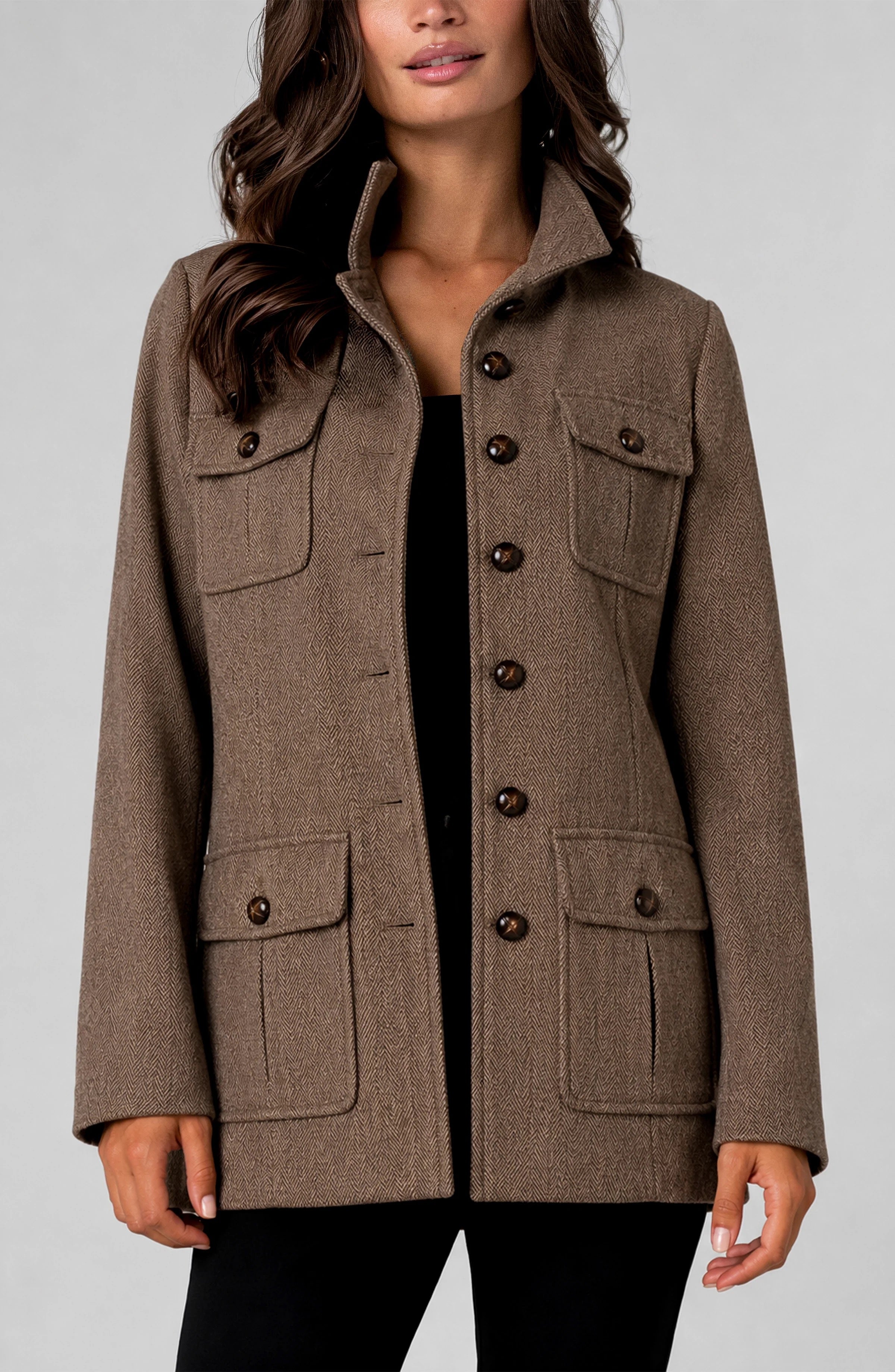
Best for: Women who want one jacket that handles work, weekends, and school pickup. Skip if: You prefer a cropped shape that hits at the waist.
Best for Cold Mornings: Rue Zip Up Sweater Knit Jacket
Cold mornings call for the Rue Zip Up Sweater Knit Jacket. The chunky chocolate knit and turtleneck collar add warmth, and the two-way zipper lets you wear it zipped to the top, open, or unzipped from the bottom over leggings. It runs big by design, so size down for a closer fit.
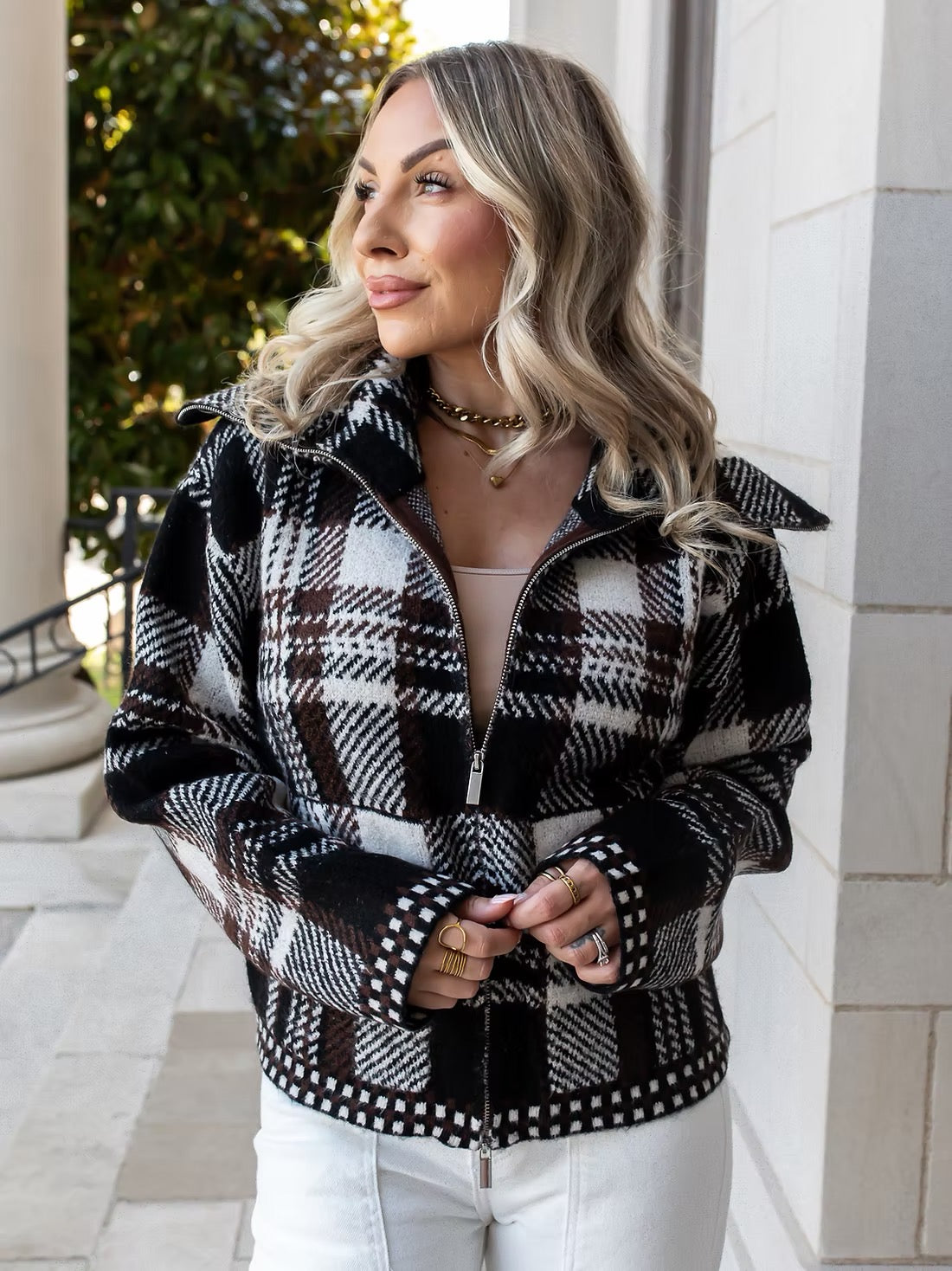
Best for: Layering on chilly mornings without bulk. Skip if: You want a structured, tailored jacket.
Best Transitional Layer: Sherpa Trimmed Denim Jacket
The Sherpa Trimmed Denim Jacket bridges the gap between October and real coat weather. Faux teddy sherpa trims the collar, front placket, and cuffs, and the jacket is unlined so it layers easily. At 38 inches it hits coat length, which is why it works over dresses and sweaters.
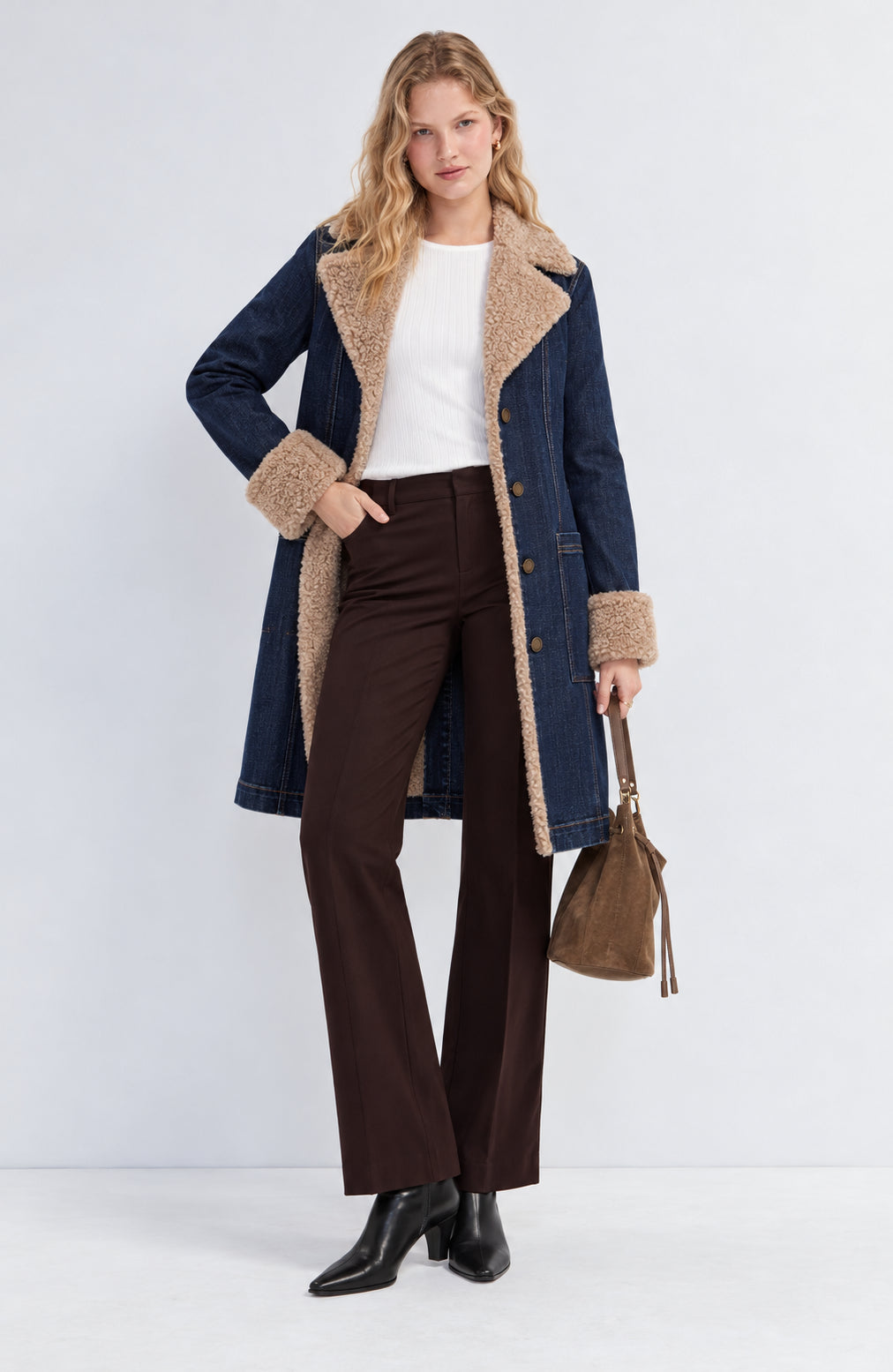
Best for: Transitional weeks when a heavy coat feels like too much. Skip if: You want a cropped, classic jean jacket silhouette.
Best Statement Piece: Z Supply Corin Faux Suede Bubble Hem Jacket
The Z Supply Corin Faux Suede Bubble Hem Jacket has a distinctive shape. The sculpted bubble hem and high funnel neck do the styling work, so a plain tee and jeans suddenly look intentional.
Best for: Dinners, events, and days you want the jacket to be the outfit. Skip if: You want something you can machine wash after a muddy school run.
Women's Lightweight Jackets for Everyday Wear
Our lightweight picks include the 3/4 Sleeve Frayed Flounce Jacket with frayed hems and a flounced back, and the Anchor Down Cardigan, a knit jacket for everyday wear.
For in-between weather, the Melanie Mixed Media Quilted Jacket pairs a quilted front with cable-knit sleeves and has a relaxed silhouette.
Jacket Fit and Sizing Guide
Measure your bust and compare it to the size chart before you order, then add room for the layer you plan to wear underneath. A jacket cut to layer over a sweater needs a little extra room through the chest. One cut close to the body will feel tight the moment you add a knit.
| Style | Length | Fit Note | Size Guidance |
|---|---|---|---|
| Funnel Neck Field Jacket | 29" | Longer silhouette, fully lined | Take your usual size |
| Rue Sweater Knit Jacket | 24" | Boxy, runs big | Size down |
| Sherpa Trimmed Denim Jacket | 38" | Shaped with stretch | Take your usual size |
| Corin Bubble Hem Jacket | 22" | Built with volume | Take your usual size |
Layering Room and Sleeve Length
Layering room is easy to forget. Consider the layer you plan to wear underneath when you choose your size. If you plan to layer, size to your bust plus that room, not to your bare measurement. Sleeve length matters too: a sleeve that ends at the wrist bone leaves room for a cuff to show, while a sleeve that hits mid-hand will bunch under a coat.
Fit Guidance for Different Body Shapes
A jacket that fits one body shape well can fight another, so use the silhouette as your guide rather than a single size number.
- Pear shapes: A longer, shaped jacket like the field jacket balances a fuller hip. Look for a hem that falls below the widest point rather than cutting across it.
- Apple shapes: A boxy or bubble-hem jacket that skims the midsection works better than a belted waist. The Corin bubble hem is built with volume, so it floats rather than clings.
- Rectangle shapes: A shaped denim jacket with stretch adds curve at the waist, while a funnel neck draws the eye up.
Inclusive Sizing and What to Confirm Before You Order
Confirm the size range on each product page before you choose a piece. If you are between sizes, consider the layer you plan to wear underneath, and note that the Rue sweater knit runs big, so size down. When in doubt, compare the garment measurements on the size chart with a jacket in your closet that fits the way you want this one to fit.
How to Choose a Jacket Online
Choosing a jacket online comes down to reading the details most shoppers skip. Check the fabric composition, the lining, the care instructions, and the measurements, in that order.
- Fabric: A blend with a little stretch, like the field jacket's polyester-viscose-elastane shell, gives you some movement.
- Lining: A full polyester lining, as on the field jacket, adds structure to the piece.
- Care: Check the care instructions on each product page before you buy.
- Measurements: A stated length in inches tells you where the hem lands better than a photo does.
If you are learning to judge fabric and construction from photos, our guide on how to choose durable jeans online walks through the same checks for denim.
Styling Your New Jacket for Work and Weekends
One jacket should stretch across settings, and these four do. For work, wear the field jacket over a knit and tailored trousers, or the Rue sweater jacket over a blouse with ankle boots.
The trick is proportion. A cropped jacket pairs with high-rise denim. A longer silhouette balances leggings and slim pants. Keep the layers underneath close to the body so the jacket reads as the finish, not the bulk.
Find Your Next Everyday Jacket at Shop
A jacket you love should earn its hanger space four days a week. If you are tired of layers that pill, pull, or lose their shape by midseason, start with a piece built to last. Shop hand-picks every style in our collection, and you can browse online or visit us in store for personalized styling support. Our team is here to help you find the fit and fabric that suits your season of life, with fast, careful shipping straight from our boutique to your door.
Get started with Shop and find the one jacket you will reach for all season.
Frequently Asked Questions
What is a good jacket for everyday wear?
A good everyday jacket balances three things: warmth you can layer, a shape that works over both jeans and trousers, and fabric that holds up to regular wear. The Funnel Neck Field Jacket at $149 is a strong all-rounder because the textured herringbone shell is fully lined and the funnel neck keeps you cozy when the wind picks up, while the 29-inch length gives a longer, flattering silhouette. For a lighter layer, the 3/4 Sleeve Frayed Flounce Jacket at $119 is a cropped option with a flounced back.
How can you tell if a jacket is well made?
Turn it inside out. Look for seams that are straight and finished, not raw or puckered. Check that the lining sits flat and is attached at the hem, not hanging loose. Zip the zipper up and down a few times to feel for snags. Feel the fabric weight: a quality jacket has some substance without stiffness. Buttons should be securely stitched with a thread shank. These details help you judge whether a jacket is well constructed before you buy.
How should an everyday jacket fit?
It should close comfortably over a sweater without pulling at the shoulders or chest. Raise your arms: the hem shouldn't ride up past your waistband. The sleeve should end at your wrist bone so it doesn't swallow your hands. For layering pieces, a relaxed fit gives you room for a knit underneath; for a cropped style like the Z Supply All Day Jacket, take your usual size for the intended oversized look or size down for a closer fit. When between sizes on the Rue Zip Up Sweater Knit Jacket, size down because it runs big.
What jacket materials are best for everyday use?
Look for fabrics that resist wrinkles and hold their shape: cotton blends, polyester blends, and faux suede work well for daily wear. The Funnel Neck Field Jacket uses a textured herringbone shell of polyester, viscose, and elastane. A faux suede like the Corin Bubble Hem Jacket gives you texture without the care demands of real suede, though it is dry clean only. For at-home care, the Sherpa Trimmed Denim Jacket is machine washable, inside out, in cold water.

Leave a comment